Skip to header Skip to main navigation Skip to main content Skip to footer
englishfrançaisdeutschitalianosvenskaespañoltürkçenederlandsportuguêsΕλληνικά
русскийहिन्दीفارسی한국어日本語filipino中文বাংলাmagyarsuomi
Home
International Communist Current
Workers of the world, unite!

Main navigation

      • Britain
      • India
      • United States
      • Rest of the world
    • By post
  • What is the ICC?
    • Introduction
    • Basic Positions
    • Platform
    • Manifesto (1975)
    • Manifesto (1991)
    • History of the ICC
      • 20 years of the ICC
      • 30 years of the ICC
    • What is the communist left?
    • ICConline
      • 1990s
      • 2000s
      • 2010s
      • 2020s
    • International Review
      • 1970s - 1 to 19
      • 1980s - 20 to 59
      • 1990s - 60 to 99
      • 2000s - 100 to 139
      • 2010s - 140 to 163
      • 2020s - 164 to ...
    • World Revolution
      • 1970s
      • 1990s
      • 2000s - 231 to 330
      • 2010s - 331 to 384
      • 2020s - 385 to ...
    • Internationalism
      • 1990s
      • 2000s
      • 2010s
    • Internasyonalismo
      • 2000s
      • 2010s
    • Communist Internationalist
      • 2000s
      • 2010s
    • Dutch and German Communist Left
    • The Italian Communist Left 1926-45
    • Communist Organisations and Class Consciousness
    • Nation or Class?
    • The Period of Transition
    • Decadence of Capitalism
    • Unions Against the Working Class
    • Left Wing of the Turkish Communist Party
    • Manifesto on the October revolution
    • World War I
    • Subscriptions
    • Buy from ICC
    • Buy offline

Turkey

Breadcrumb

  • Home
  • Europe

Kurdish nationalism – another pawn in imperialist conflicts

In order to understand the significance of the escalation of events following the September 2017 referendum about Kurdish independence on the territory of the present Iraqi State and the reactions of the governments in the region and worldwide, we have to go back to historical developments that took place more than a century ago. This article is published at the same time as "Erdogan’s ‘New Turkey’: a prime illustration of capitalism’s senility" and we recommend reading the two articles together.

  • Read more about Kurdish nationalism – another pawn in imperialist conflicts

Erdogan's "New Turkey": a prime illustration of capitalism's senility

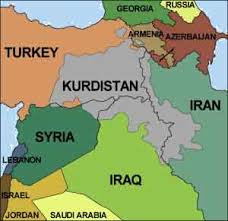
The history of Turkey, particularly its relatively recent history, is a complex one and we can't possibly cover all of it in one article. For example, we will produce a separate piece to look at the intimately-related "Kurdish Question", in which the demand for national self-determination was already an anachronism at the turn of last century. But in looking at some significant examples of the operations of the Turkish state from its inception, and particularly since the 1990's, we can clearly identify the global developments of economic crisis, repression, militarism and irrationality that have marked the twentieth century and the beginning of the twenty-first. We can ask the questions of what global components of the decadence of capitalism, and what specific elements of Turkey's past, affect and direct the present situation of a totalitarian, militarised and increasingly Islamicised state; and we can also ask to what extent this dire situation is the result of the unbridled ambition of one man and his "vision" or whether it represents the latest twists of Turkish imperialism in the increasing chaos in the Middle East imposed on it by a generalised capitalist decomposition.

  • Read more about Erdogan's "New Turkey": a prime illustration of capitalism's senility

The “New Turkey” brings new problems for the country, the Middle East and beyond

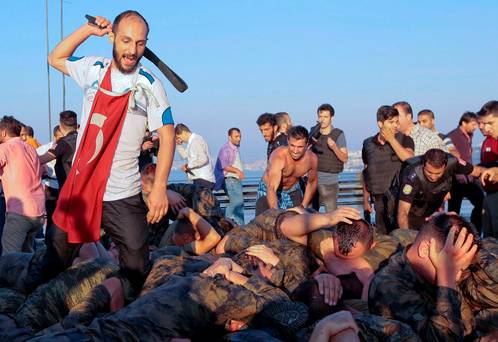
The internal response to the July 15/16 attempted coup was, according to Turkish President Erdogan, a “Gift from God”. He insisted that the “cleansing” would continue and the “virus would be eradicated” along with terrorists wherever they were. Sure enough, a Stalinist-like purge, with lists of names already drawn-up, was implemented with force and the war against the Kurds in south-east Turkey immediately stepped up.

 
  • Read more about The “New Turkey” brings new problems for the country, the Middle East and beyond

Turkey: The cure for state terror isn't democracy

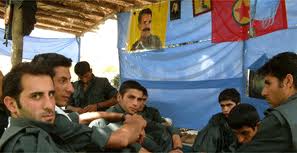
Image removed.The article that follows was written by the comrades of our section in Turkey – a young section, both in the history of the ICC and in the age of its members. Both as revolutionaries and as part of the generation that has led the revolt, these comrades have been actively involved in the movement on the streets and this represents a first report ‘on the spot’ and a first attempt to analyse the significance of the movement.
  • Read more about Turkey: The cure for state terror isn't democracy

Internationalism is the only response to the Kurdish issue

In early August 2012, an international anarchist meeting was held in the commune of St Imier (Swiss Jura). One of the speakers was the spokesperson of Fekar. The initiative to let this person speak at the meeting was taken by the Swiss group of the Forum of German-speaking Anarchists, which aims to bring together Turkish/Kurdish anarchists in a single federation.

  • Read more about Internationalism is the only response to the Kurdish issue

After the 1908 mutiny: mass strikes and the socialist movement

The event that bears the closest similarities to the 1908 revolt, is the Russian Revolution of 1905. The most obvious similarity is the fact that in both cases, faced with massive opposition, absolutist monarchies granted constitutional regimes and parliaments. The difference was that the Ottoman Meclis-i Mebusan was considerably stronger than the Russian Duma, and the Ottoman bourgeoisie was determined not to hand power back to the monarchy.

  • Read more about After the 1908 mutiny: mass strikes and the socialist movement

The development of the Left Wing of Armenian and Macedonian socialism

After three years organizing and six years of intense activity, by 1896 two clear factions had appeared within the Revolutionary Hunchak Party. One was led by Avetis Nazarbekian and his wife Maro Vardanian, who controlled the party center. The other was formed by their opponents. However this split within the Party was far from being simply about the personalities of Nazarbekian and Vardanian. The dissidents were opposing a very basic and integral part of the party line, namely that it was socialist.

  • Read more about The development of the Left Wing of Armenian and Macedonian socialism

Socialism and the workers’ movement in the Ottoman Empire

Image removed.The article published here is the first part of The Left Wing of the Turkish Communist Party, beginning a new edition of this pamphet. 

In 1889 the Second International was founded as a result of the attempts of the socialist parties of Western European countries such as Germany, France and Belgium to bring together different social democratic parties of the time. For the most part, the world communist movement of the future would emerge from this organization. While the Second International remained focused on Western Europe from its foundation to its collapse, and while it was designed from the start as a federation of national parties rather than a centralized structure, it was nevertheless to become a magnet for all the socialist movements of the time, from North and South America to the Far East.

  • Read more about Socialism and the workers’ movement in the Ottoman Empire

The choice is imperialist war or class war

Over and over again, we have been told that in any military conflict there is no choice but to take sides for one or the other party in the conflict: for democracy against dictatorship, for "the people" against "imperialism". This article proposes an in-depth analysis of the tensions between the different imperialist states in the Middle East and in doing demonstrates clearly that the workers can expect nothing, no improvement in their lot, from any of the regimes in place or from any of the so-called "revolutions" of the Arab spring.

  • Read more about The choice is imperialist war or class war

Turkey, Syria and war

Recently, the Turkish agenda has been shaken by the possibility of war with Syria; a situation which is still, more or less, intact. Following the deaths of five civilians as a result of the shelling of a town called Akçakale, near the city of Urfa, the government rapidly included Syria in the new bill it was preparing, giving it the right to militarily intervene in Iraq. It was altered to give the government the authority to militarily intervene abroad in general. It was also declared that Turkey had started shelling Syria. As the Turkish Prime Minister Erdogan and members of his Justice and Development Party started openly expressing the possibility of the war option, death dealers quickly appeared among the Turkish bourgeois press, going as far as accusing those opposed to war of cowardice.

  • Read more about Turkey, Syria and war
Pagination
  • Page 1
  • Next page ››
Subscribe to Turkey
Home
International Communist Current
Workers of the world, unite!

Footer menu

  • Basic positions of the ICC
  • Contact