Imperialist conflict between China and Japan
Recent clashes in 2012 and 2013 over the Senkaku/Diaoyu/Tiaoyus islands (the archipelago is located roughly 200 km northeast of Taiwan, 400 km southwest of the Japanese Okinawa island, and almost 400 km east of China) have brutally brought to the fore the ambitions and tensions of the two biggest regional rivals in the Far East. Both China, the most populated country and second most important economic power in the world, and Japan, the third biggest economic power, have escalated tensions around the islands and regularly mobilise troops which have been engaged in shows of force. Taiwan has also clashed with Japan over the island. This must be of great concern not only to the population in Japan and China and the region, but the whole world.
The imperialist position of Japan
The imperialist constellation in the far East had undergone profound changes with the end of World War I.
Already after the Russian-Japanese 1905 war Japan continued to remain the dominant force in the far East, but after World War I Japan was no longer going to clash mainly with European rivals. Instead the main rivalry was going to unfold with the USA who was the big winner of World War I. Following the period after World War I the USA and Japan became the main imperialist sharks in the far East for several decades.
Conflict over Korea
Japan: a newly emerging capitalist force
Between the middle of the 17th and the middle of the 19th century, Japan cut itself off from the rest of the world. No foreigner was allowed into the country, no Japanese was allowed to leave the country without permission, trade with other countries was limited to very few ports. Even if there was a very limited and weak dynamic of trade developing within the country, the real historical breakthrough occurred when the country after almost two centuries of self-imposed seclusion was forcefully opened up by capitalism.
Fukushima: one year after
In March 11th 2011 a gigantic tsunami flooded the Japanese east coast. The earthquake and the tsunami brought to the fore the potential dangers arising from both settlement along the coasts in times of climate change and the way the ruling classes deal with nuclear power. For reasons of space, we want to focus in this article on the consequences of the nuclear melt-down.
Japan: grim outlook for workers
Post your responses to the catastrophe in Japan!
 We are starting a thread on our forum on the nightmarish situation in Japan following the huge earthquake in the north of the country. The first post is translated from the opening post of a thread on our French web page. We encourage others to contribute, to express their horror and anger, and to develop a discussion about the degree to which we can hold capitalism responsible for this so-called natural disaster.
On Imperialist rivalries in Asia: Report to ICC Pan-Asian Conference
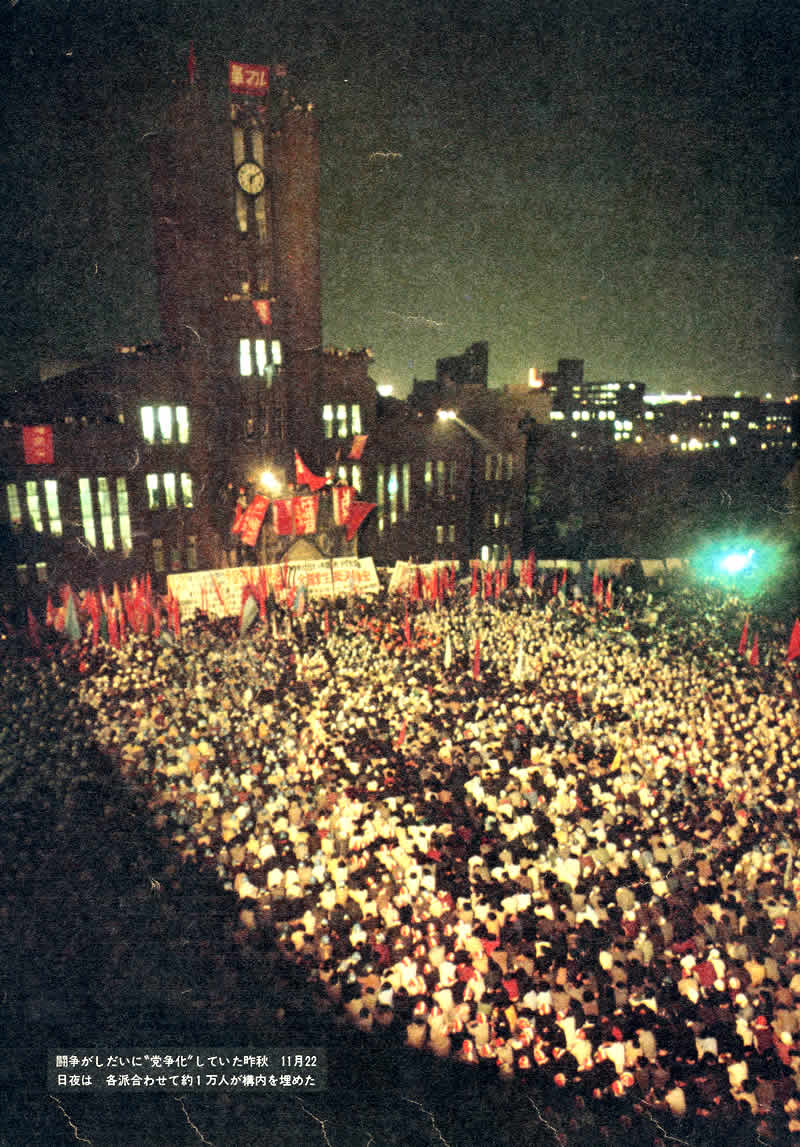
1968 in Japan: the student movement and workers' struggles
As we have already pointed out in several articles published in the International Review and in our territorial press, the events in France during May 1968 were only part of a much broader movement around the world.
We are publishing here an article from a comrade in Japan, which demonstrates clearly that this broader movement also had its counterpart there, despite the specific and difficult historic particularities of that country.
The future proletarian revolution will be internationalist and international or it will be nothing. It is one of the greatest responsibilities of internationalists around the world today to place their local experience firmly within the framework of world events, to understand the movement of the working class in any one place as being only a part, an expression of a greater whole, and to contribute to an international debate within the working class on the lessons of past events for the future of the struggle against a moribund capitalism. We therefore salute comrade Ken's effort to place the events of 1968 in Japan in both a historical and a global context. We support his conclusion wholeheartedly: "We would be satisfied if this brief summary reflection upon the Japanese "68" could assist in some way in the international coordination of the global working class (this was the most important thing then, and the most important thing now)."