The general strike of 10 million French workers in May 1968 was the biggest strike in history, and sparked off an enormous wave of workers' struggles throughout the world, bringing the period of the counter-revolution that followed October 1917 to an end.
Fifty years ago, May 68
The events of spring 1968 in France, in their roots and in their results, had an international significance. Underlying them were the consequences for the working class of the first symptoms of the world economic crisis, which was reappearing after well over a decade of capitalist prosperity.
After decades of defeat, disorientation and submission, in May 1968 the working class returned to the scene of history. While the student agitation which had been developing in France since the beginning of spring, and the radical workers’ struggles which had broken out the previous year, had already changed the social atmosphere, the entry en masse of the class struggle (10 million on strike) overturned the whole social landscape.
France, May 1968: The proletariat returns to centre stage
Twenty-five years after May 68: What’s left of May 68?
20 years since 1968: The evolution of the proletarian political milieu, III
20 years since 1968: The evolution of the proletarian political milieu, II
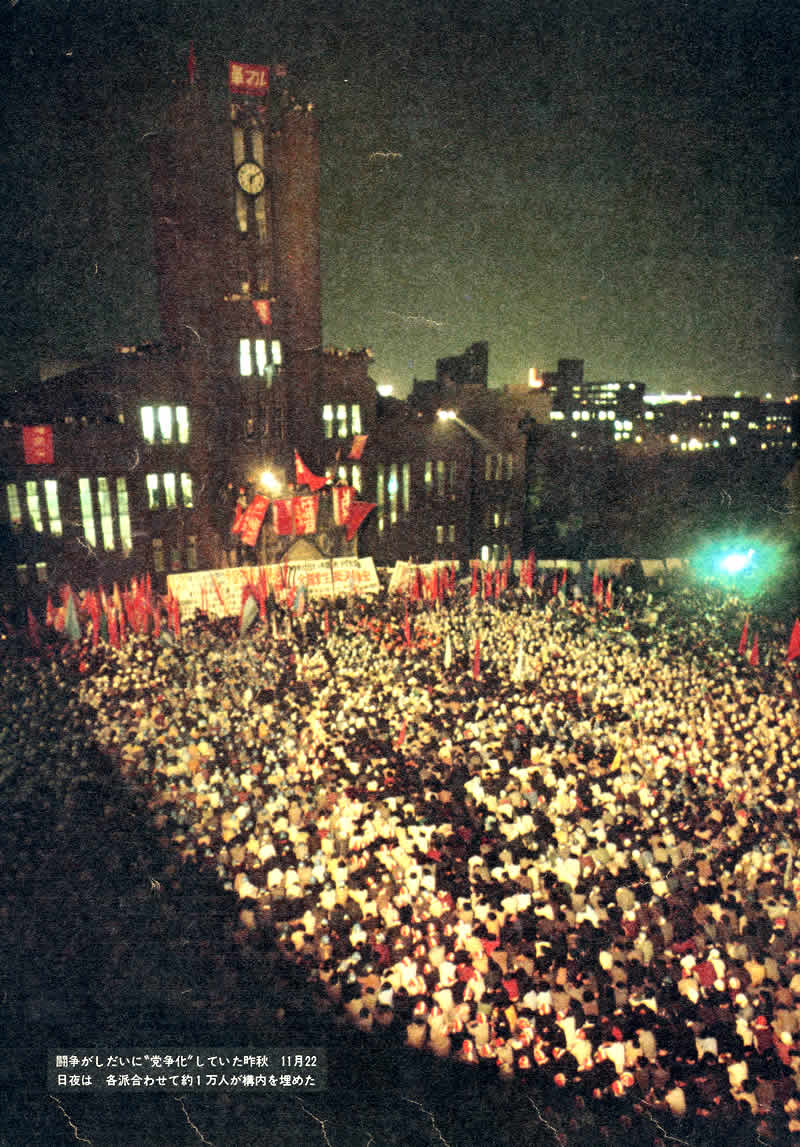
1968 in Japan: the student movement and workers' struggles
As we have already pointed out in several articles published in the International Review and in our territorial press, the events in France during May 1968 were only part of a much broader movement around the world.
We are publishing here an article from a comrade in Japan, which demonstrates clearly that this broader movement also had its counterpart there, despite the specific and difficult historic particularities of that country.
The future proletarian revolution will be internationalist and international or it will be nothing. It is one of the greatest responsibilities of internationalists around the world today to place their local experience firmly within the framework of world events, to understand the movement of the working class in any one place as being only a part, an expression of a greater whole, and to contribute to an international debate within the working class on the lessons of past events for the future of the struggle against a moribund capitalism. We therefore salute comrade Ken's effort to place the events of 1968 in Japan in both a historical and a global context. We support his conclusion wholeheartedly: "We would be satisfied if this brief summary reflection upon the Japanese "68" could assist in some way in the international coordination of the global working class (this was the most important thing then, and the most important thing now)."