Skip to header Skip to main navigation Skip to main content Skip to footer
englishfrançaisdeutschitalianosvenskaespañoltürkçenederlandsportuguêsΕλληνικά
русскийहिन्दीفارسی한국어日本語filipino中文বাংলাmagyarsuomi
Home
International Communist Current
Workers of the world, unite!

Main navigation

      • Britain
      • India
      • United States
      • Rest of the world
    • By post
  • What is the ICC?
    • Introduction
    • Basic Positions
    • Platform
    • Manifesto (1975)
    • Manifesto (1991)
    • History of the ICC
      • 20 years of the ICC
      • 30 years of the ICC
    • What is the communist left?
    • ICConline
      • 1990s
      • 2000s
      • 2010s
      • 2020s
    • International Review
      • 1970s - 1 to 19
      • 1980s - 20 to 59
      • 1990s - 60 to 99
      • 2000s - 100 to 139
      • 2010s - 140 to 163
      • 2020s - 164 to ...
    • World Revolution
      • 1970s
      • 1990s
      • 2000s - 231 to 330
      • 2010s - 331 to 384
      • 2020s - 385 to ...
    • Internationalism
      • 1990s
      • 2000s
      • 2010s
    • Internasyonalismo
      • 2000s
      • 2010s
    • Communist Internationalist
      • 2000s
      • 2010s
    • Dutch and German Communist Left
    • The Italian Communist Left 1926-45
    • Communist Organisations and Class Consciousness
    • Nation or Class?
    • The Period of Transition
    • Decadence of Capitalism
    • Unions Against the Working Class
    • Left Wing of the Turkish Communist Party
    • Manifesto on the October revolution
    • World War I
    • Subscriptions
    • Buy from ICC
    • Buy offline

Second International

Breadcrumb

  • Home
Born out of the regroupment of the various socialist parties as they re-emerged from the counter-revolutionary period that followed the Paris Commune. The Second International was formed essentially by marxist currents, and saw a bitter struggle in the years leading up to World War I between its internationalist left wing, and the opportunists. The victory of opportunism led to the Second International's definitive betrayal in 1914.

The world bourgeoisie against the October Revolution (part two): Social democracy and Stalinism forever in the bourgeois camp


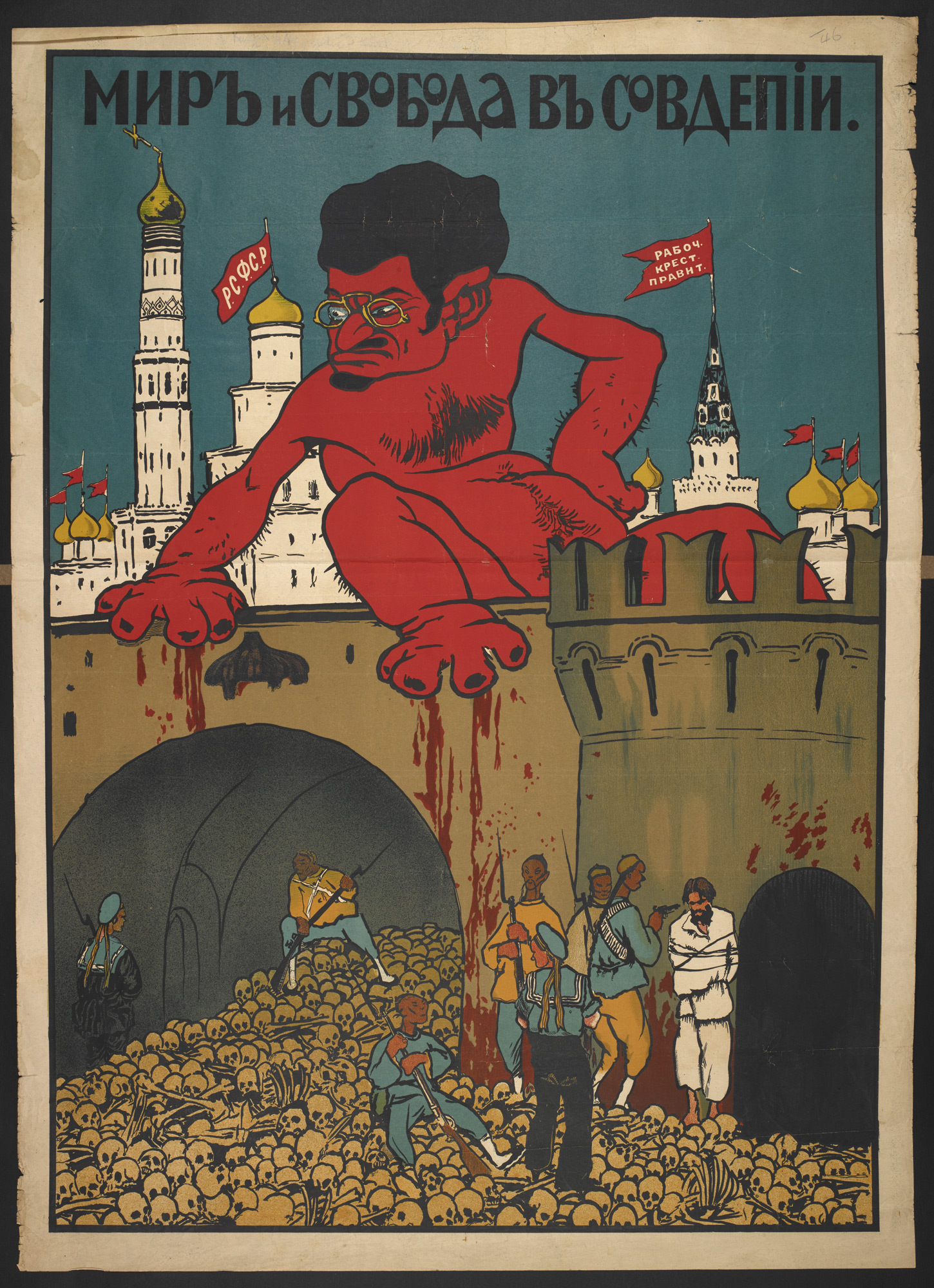
Anti-Bolshevik propaganda poster 1919

In the first part of this article we highlighted the response of all the great imperialist powers to stem the revolutionary wave and prevent it from spreading in the major industrialised countries of Western Europe. In this article we look at the decisive contribution of social democracy to this reactionary project, and of Stalinism as one of the worst products of the isolation and defeat of the world revolution.
  • Read more about The world bourgeoisie against the October Revolution (part two): Social democracy and Stalinism forever in the bourgeois camp

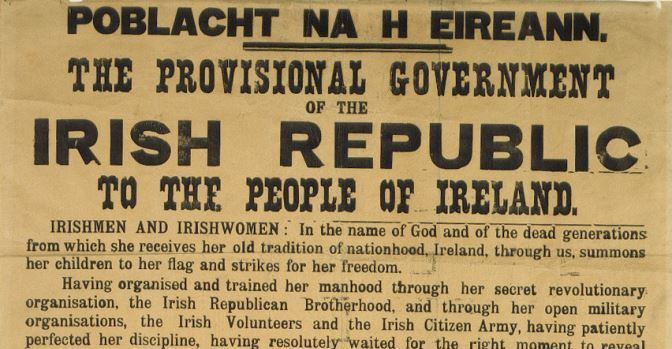
The national question 100 years after the Easter Rising

How the failure to understand that changing conditions invalidated the Second International's stand on democracy and the national question led the internationalist James Connolly into support for the Irish nationalist uprising in Dublin, 1916.

  • Read more about The national question 100 years after the Easter Rising

Jean Jaurès: a giant of the workers' movement

The ruling class has all but transformed him into a national monument, and yet today Jean Jaurès is almost unknown outside France. His assassination on 31st July 1914 remains mysterious to this day: it removed one of the biggest barriers to France's entry into World War I

  • Read more about Jean Jaurès: a giant of the workers' movement

1914: How the 2nd International failed

Over and over, the 2nd International and its member parties had warned the workers of the coming war and threatened the ruling classes with their own overthrow should they dare launch Armageddon. And yet in August 1914, the International disintegrated, blown away like insubstantial dust, as one after the other its leaders and parliamentary deputies betrayed their most solemn promises, voted war credits and called the workers to the slaughter.

How could such a disaster happen?

  • Read more about 1914: How the 2nd International failed

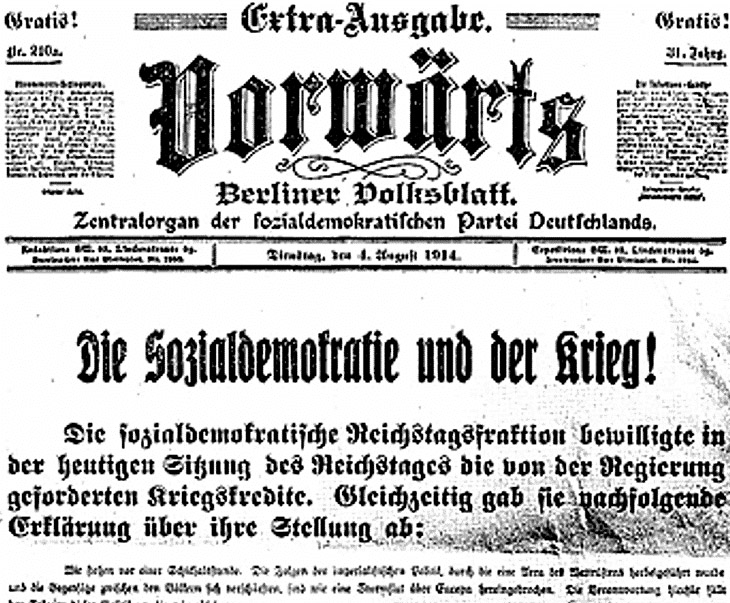
1914: how German socialism came to betray the workers

In 1914, the German Social-Democratic Party was the most powerful party of the Second International. With more than one million members, it was the largest single political party in Europe and the largest party in any European parliament. Socialists throughout the world, faced with the threat of war in the last days before that fateful 4th August, waited for the SPD to live up to its solemn commitments made at the International's congresses at Stuttgart and Basel, and oppose the war. Yet on 4th August, the SPD parliamentary fraction voted for the Imperial government's war credits, and the way to war was open.

How the German Party degenerated in the years leading up to 1914 to the point where it betrayed its most fundamental principles, and the struggle of the left in the party against this degeneration, is the subject of the article that follows.

  • Read more about 1914: how German socialism came to betray the workers

The Question of War in the 1st and 2nd Internationals

On the eve of World War I, when revolutionaries like Lenin and Rosa Luxemburg declared the internationalist position characteristic of capitalism's new historic phase - "There is no

  • Read more about The Question of War in the 1st and 2nd Internationals

Friedrich Engels: A Great 'Builder of Socialism'

Born at Barmen in 1820, in what was then the Rhenish province of Prussia, Engels was an example of a militant devoted all his life to the struggle of the working class. He came from a family of industrialists, and could have lived in wealth and comfort without paying any attention to the political struggle. But like Marx, and many other young students revolted by the misery of the world in which they lived, while still young he acquired an exceptional political maturity, in contact with the workers' struggle in Britain, France, and then Germany. It was inevitable that the proletariat should attract a certain number of intellectual elements to its ranks, in this period when it was forming itself as a class, and developing its political struggle.
  • Read more about Friedrich Engels: A Great 'Builder of Socialism'

4 - The theory of decadence at the heart of historical materialism

In the first article in this series, published in International Review n118, we saw how the theory of decadence is at the very heart of historical materialism, of Marx and Engels’ analysis of the evolution of modes of production. Equally, we find the same notion at the centre of the programmatic texts of the organisations of the working class. Furthermore, not resting at merely adopting this foundation-stone of marxism, some of these organisations have developed the analysis and/or its political implications. It’s from this dual point of view that we aim here to briefly review the main political expressions of the workers’ movement. In this first part we will begin with the movement in the days of Marx, the Second International, the marxist lefts which came out of it, and the Communist International at the time it was formed. In the second part, which will appear in a future issue, we will examine more closely the analytical framework for the political positions developed by the Third International and then by the left fractions which emerged from it as it began to degenerate, and from which we draw our political and organisational origins.

  • Read more about 4 - The theory of decadence at the heart of historical materialism

The left fractions and the question of organisational discipline

In a previous article (InternationalReview n°108), we described the emergence of the leftfractions that fought the degeneration of the old workers'parties, in particular the German SPD that supported the wareffort of its national capital in 1914, and the Russian CP and theThird International as they were being transformed intoinstruments of the Russian state with the progressive defeat ofthe October Revolution. In this process, the task of the fractionswas to struggle to re-conquer the organisation for the fundamentalpositions of the proletarian programme, against their abandonmentby the opportunist right and the complete betrayal by theleadership controlling the majority of the organisation. Topreserve the organisation as an instrument of the class struggleand to save as many militants as possible, one of the leftfractions' main concerns was to remain in the party as long aspossible. However, the process of political degeneration wasinevitably accompanied by a profound modification in the partiesthemselves, and in the relationships between the militants and theorganisation as a whole. Inevitably, this situation posed for thefractions the problem of breaking party discipline in order tofulfil their task of preparing the new party of the proletariat.

  • Read more about The left fractions and the question of organisational discipline

The History of the Workers' Movement in Japan, II

The debate on the means of struggle

The revolutionary events of 1905 in Russia provoked something like an earthquake in the whole workers' movement. As soon as the workers' councils were formed, as soon as the workers launched mass strikes the left wing of Social Democracy (with Rosa Luxemburg in her text Mass strike, Party and Trade Unions, Trotsky in his text on 1905, Pannekoek in several texts, especially on parliamentarism), started to draw the lessons of these struggles.

  • Read more about The History of the Workers' Movement in Japan, II
Pagination
  • Page 1
  • Next page ››
Subscribe to Second International
Home
International Communist Current
Workers of the world, unite!

Footer menu

  • Basic positions of the ICC
  • Contact