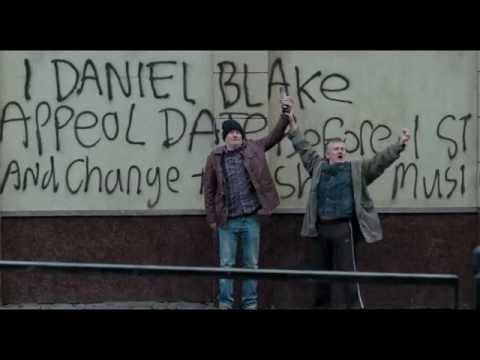
Review: "I, Daniel Blake", a film by Ken Loach
Ken Loach’s latest film, I, Daniel Blake, has already generated a lot of ink. First because it is the work of a very expressive film-maker who is well-versed in criticising the capitalist world. Second, because the film won the Palme d’Or at the Cannes film festival, to widespread surprise. Since then there have been numerous articles in the press, praising or attacking the film, seeing it either as a real social thermometer or as an alarmist tear-jerker.
The question of the relations between nature and culture (on the book by Patrick Tort, Sexe, Race & Culture)
What are the basic question posed by racism, xenophobia, sexism and homophobia, by all these social behaviours which reveal human alienation and which can go as far as murder. How does one explain such an unleashing of social violence; how do you understand these prejudices which seem to come from a bygone age of superstition? How, faced with these types of problems, do you guard against the ideological thinking that the bourgeois system abundantly spreads around in order to mask reality and accentuate the divisions which weaken its historic enemy, the class of proletarians?
Max Raphael and a Marxist perspective on art (Part 2)
By starting a new heading of ‘Readers’ Contributions’ on our website, and occasionally in our paper, we hope to encourage our readers and sympathisers to write texts and articles which can go into greater depth than is possible in our discussion forum, and so stimulate a longer term reflection. These articles, while being broadly based on proletarian politics, need not fully represent the positions of the ICC, or may deal with issues on which the ICC does not have a collective view. The question of art is clearly such an issue, and we welcome Boxer’s effort to deepen our understanding of the marxist approach to humanity’s creative productions.
Max Raphael and a Marxist perspective on art (Part 1)
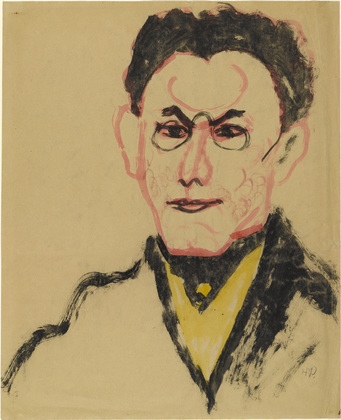
The main purpose of this article is to bring the work of Max Raphael into the field of contemporary marxist attention and discussion where it belongs. The bourgeoisie calls many of its intellectuals “marxist”, which not only serves to give them a sheen of credibility but usually helps to debase genuine marxist contributions. Many learned individuals have important things to say around the various ideological spheres that have grown up around society and this is to be expected. But unlike the bourgeois “marxists” who pronounce on the ideologies of the ruling class, the views of Max Raphael are very clear on the necessity of the revolutionary overthrow of a corrupt and destructive capitalism by independent working class action, and this fact alone leads us to express an interest in trying to understand his works. Raphael wrote dozens of books and many more papers on art, mostly in French and German with a few in English. He said that if one wanted to understand his views on art then all of them should be read. We can’t do that or even approach it, but we can draw out some elements in order to give us a deeper perspective on art within a framework of the workers’ movement.
Truth and memory, art and propaganda
Barbarous gang rape in Delhi
‘Marriage for everyone’: only communist society can put an end to sexual discrimination
By announcing the forthcoming adoption of a law authorising gay marriage, the French government has provoked a series of mobilisations and media debates where everyone is asked to choose their camp : ‘for’ or ‘against’ gay marriage. The same thing has happened in other countries: in Britain David Cameron’s proposal to legalise gay marriage has created deep divisions in both the Tory party and the Anglican Church (which had already been convulsed by the scandalously radical idea of allowing gay priests and women bishops).
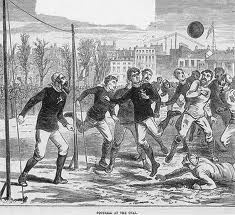
The History of Sport Under Capitalism (Part III) - Sport, nationalism and imperialism
The History of Sport Under Capitalism (Part I) - Sport in the ascendant phase of capitalism (1750-1914)
For a long time sport has represented a phenomenon that cannot be ignored from the fact of its cultural breadth and its place in society. A mass phenomenon, it's imposed on us through the tentacles of many institutions and results in a permanent hammering from the media. What significance can we give it from the point of view of a historical understanding and from the point of view of the working class?