Japan

Fukushima: one year after

In March 11th 2011 a gigantic tsunami flooded the Japanese east coast. The earthquake and the tsunami brought to the fore the potential dangers arising from both settlement along the coasts in times of climate change and the way the ruling classes deal with nuclear power. For reasons of space, we want to focus in this article on the consequences of the nuclear melt-down.

Japan: grim outlook for workers

The outlook for workers in Japan is grim. After the trauma of the natural disaster comes the trauma of trying to rebuild their lives under the weight of the economic crisis.

Post your responses to the catastrophe in Japan!

We are starting a thread on our forum on the nightmarish situation in Japan following the huge earthquake in the north of the country. The first post is translated from the opening post of a thread on our French web page. We encourage others to contribute, to express their horror and anger, and to develop a discussion about the degree to which we can hold capitalism responsible for this so-called natural disaster.
 

On Imperialist rivalries in Asia: Report to ICC Pan-Asian Conference

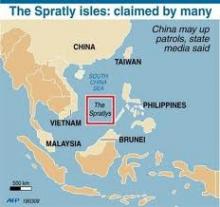
This report represents an effort by the ICC's sections in Asia to come to grips with the specificities of imperialist tensions in Asia, and in particular as far as they concern the rising powers of China and India.

1968 in Japan: the student movement and workers' struggles

Yasudakodo, 22 November 1968
As we have already pointed out in several articles published in the International Review and in our territorial press, the events in France during May 1968 were only part of a much broader movement around the world.

We are publishing here an article from a comrade in Japan, which demonstrates clearly that this broader movement also had its counterpart there, despite the specific and difficult historic particularities of that country.

The future proletarian revolution will be internationalist and international or it will be nothing. It is one of the greatest responsibilities of internationalists around the world today to place their local experience firmly within the framework of world events, to understand the movement of the working class in any one place as being only a part, an expression of a greater whole, and to contribute to an international debate within the working class on the lessons of past events for the future of the struggle against a moribund capitalism. We therefore salute comrade Ken's effort to place the events of 1968 in Japan in both a historical and a global context. We support his conclusion wholeheartedly: "We would be satisfied if this brief summary reflection upon the Japanese "68" could assist in some way in the international coordination of the global working class (this was the most important thing then, and the most important thing now)."

State repression in Japan

Resisting the police in Kamagasaki

We have received the report reproduced below on police repression in Japan, from a comrade on the spot.

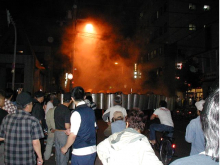
We declare our solidarity with those workers and students who have been arrested in a brutal wave of repression that gives the lie to the myth of bourgeois democracy in Japan: the ruling class has revealed its true face in unleashing the riot police on demonstrators and activists in a particularly violent manner. One of the most striking aspects of the events in Kamagasaki is that the workers there were protesting not over bad wages and working conditions but seem to have been concerned first and foremost with defending their dignity as workers and human beings: police brutality "brought over 200 workers to surround the police station and demand that the police chief come out and apologize".

Over and above this declaration of basic solidarity, however, we feel it not only necessary but a part of this expression of solidarity to make some comments on the events described in the article. 

Working class youth faced with job insecurity in Japan

Japan is one of the most powerful economies in the world but for decades the Japanese working class has been the victim of an extremely harsh and brutal exploitation. In this totally dehumanised society, workers must compete to survive; they spend long days at the office or the factory and this means many can't go home every night and have to sleep in various overcrowded dormitories near to their workplaces...

Japan: a history of the workers' struggles in Kamagasaki

The article below was sent to us recently by a comrade in Japan: it describes the emergence and decline of the squatters' and day-workers' movements which have marked the life of several Japanese cities - more particularly Osaka in this case - since the collapse of the Japanese economic "bubble" at the beginning of the 1990s, to the present day.

Hiroshima and Nagasaki expose the myth of the Good War

This article was written 10 years ago, for the 50th anniversary of the bombing of Hiroshima and Nagasaki. It is no less relevant today, even if the number of wars has increased since then, above all with the gigantic US and British military adventures in Afghanistan and Iraq...

The workers' movement in Japan 1882-1905

The following notes on the history of the revolutionary movement in Japan illustrate with some concrete details the international nature of the development of the working class and its revolutionary vanguard; the fundamental unity of its interests and struggle across the globe to overthrow world capitalism.

The History of the Workers' Movement in Japan, ii

The debate on the means of struggle

The revolutionary events of 1905 in Russia provoked something like an earthquake in the whole workers' movement. As soon as the workers' councils were formed, as soon as the workers launched mass strikes the left wing of Social Democracy (with Rosa Luxemburg in her text Mass strike, Party and Trade Unions, Trotsky in his text on 1905, Pannekoek in several texts, especially on parliamentarism), started to draw the lessons of these struggles. The emphasis on the self-organisation of the working class in councils, the critique of parliamentarism, which was pushed forward in particular by Rosa Luxemburg and Pannekoek, was not the result of a tendency towards anarchism but was a first attempt at grasping the lessons of the new situation at the onset of capitalism’s decadence and of trying to understand the new forms of struggles.

Despite the relative international isolation of revolutionaries in Japan the debate on the conditions and means of struggles that also arose in Japan reflected the tumult in the working class and its revolutionary minorities on a world scale.

Syndicate content