Although the majority of those taking part in the demonstrations against Israel's assault on Gaza are motivated by real feelings of indignation, they are caught in the trap of nationalism, and thus support for imperialist war.
Pro-Palestine demonstrations around the world
Choosing one side against another always means choosing imperialist war!
Published by ICConline
Tuesday, 7 May, 2024 - 11:33
Revolutionary press
WR 400: Fifty years of intervention in the working class
Published by ICConline
Sunday, 5 May, 2024 - 07:34
With this issue, the ICC has now published four hundred editions of World Revolution. The first issue came out in May 1974, so the publication has been going for fifty years.
War, crisis, conflicts between bourgeois gangs...
Capitalist barbarism is let loose! There's only one way out: class struggle!
Published by ICConline
Monday, 29 April, 2024 - 09:32
The wars in Ukraine and the Middle East, the terrorist attacks in Russia, uncertainty about the US presidential elections are all signs of the growing destabilisation of the capitalist world system
New warmongering campaigns
"Guaranteeing peace by preparing for war"
Published by ICConline
Monday, 22 April, 2024 - 11:28
The ruling class in the west wants the exploited to accept austerity and war preparations in the name of " national defence"
Strikes around the world
The working class is still fighting!
Published by ICConline
Saturday, 9 March, 2024 - 17:52
The international revival of workers' struggles continues, despite the huge difficulties it faces
Gangsterisation of society
Haiti, a classic expression of putrefying capitalism
Published by: ICConline
Thursday, 2 May, 2024 - 19:29

In Haiti, as well as in an increasing number of other countries in Latin America, the decomposition of this system takes the form of the merger between the state and criminal gangs.
War in decomposing capitalism
Terrorist massacre in Russia: capitalism sinks ever deeper into chaos!
Published by: ICConline
Friday, 12 April, 2024 - 13:23
The Moscow slaughter by Islamic State terrorists once again reveals the chaotic nature of today’s multiple imperialist conflicts
The fight against opportunism
The fight against opportunism, a vital challenge for the revolution
Published by: International Review
Monday, 13 May, 2024 - 13:12
The refusal to work together with other groups of the Communist Left defending the historic principles of this current in favour of collaboration with the forces of the "marsh" (the confused zone between proletarian positions and those of the left of the bourgeoisie) has a name: opportunism.
The fight against imperialist war can only be waged with the positions of the communist left
Published by: International Review
Monday, 15 April, 2024 - 13:59
The Communist Left is the only real heir to the marxist tradition of struggle against imperialist war.
Two years on from the Joint Statement of the Communist Left on the war in Ukraine
Published by: International Review
Monday, 15 April, 2024 - 19:40
A first balance sheet of our appeals to the Communist Left to make a joint statement on the current imperialist conflicts.
Imperialist disputes
War tensions between Venezuela and Guyana: workers must reject the call to defend their country
Published by: ICConline
Thursday, 25 April, 2024 - 19:09
With the growing conflict between Guyana and Venezuela, and the recent storming of Mexico's embassy by Ecuadorian police in Quito, it's clear that national and imperialist rivalries are spreading in South America as well as other regions of the world
The ambiguities of internationalist anarchism
The ACG takes another step towards supporting the nationalist war campaign
Published by: ICConline
Tuesday, 16 April, 2024 - 09:51
We examine the Anarchist Communist Group's growing concessions to the campaigns in favour of Palestinian nationalism
Internal debate on the world situation
New response to Steinklopfer
Published by: ICConline
Tuesday, 23 April, 2024 - 11:05
Continuation of a debate within the ICC about the growing drive to war, its nature in the phase of decomposition, and the state of the class struggle.
Steinklopfer: response to the reply of the ICC from August 2022
Published by: ICConline
Tuesday, 13 February, 2024 - 14:02
Continuation of a debate within the ICC about the growing drive to war, its nature in the phase of decomposition, and the state of the class struggle
Life of the ICC
Public Meeting in Madrid: The invaluable contribution of Bilan to the struggle for the world party of the proletariat
Published by: ICConline
Saturday, 23 March, 2024 - 18:37
An account of a public discussion about the historical method of the Italian Communist Left and its contribution to the communist programme.
Workers' struggle
Shock measures met with manoeuvres by the unions and the left of capital... In Argentina, the proletariat is under attack from all sides
Published by: ICConline
Thursday, 11 April, 2024 - 12:36
Workers are not only faced with vicious economic attacks from the government, they also have to deal with traps set to divert their discontent.
Internationalism against leftism
What is 'Lotta Comunista' in reality?
Published by: ICConline
Thursday, 11 April, 2024 - 11:10
In Britain, the group Lotta Comunista hides behind the “Internationalist Workers Club”, which runs food banks in London. It may at first sight look like an internationalist organisation from the tradition of the Communist left. This article argues that appearances can be deceptive.
Germany
The ruling class uses its own decomposition against the workers
Published by: ICConline
Saturday, 24 February, 2024 - 10:04
In mid-January 2024, the ruling class in Germany launched a cunning campaign to defend democracy. This campaign shows all the deviousness of the German bourgeoisie in the way it is able to exploit the vile evidence of the decomposition of its system, and especially in its ability to use this against the working class.
Farmers' protests in Europe
Anger of the farmers: a cry of despair instrumentalised against workers’ consciousness.
Published by: ICConline
Thursday, 15 February, 2024 - 11:16

Since the beginning of the year, farmers have been mobilising against the fall in their incomes. The movement, which started in Germany following the abolition of subsidies for farm diesel, has now spread to France, Belgium and the Netherlands.
Révolution Internationale 500
The revolutionary press is a political compass and a fighting weapon
Published by: ICConline
Sunday, 4 February, 2024 - 07:47

The ICC's paper in France reached its 500th issue in January.
Lessons of the workers' movement
A century after his death... Lenin remains an example for all communist militants
Published by: ICConline
Saturday, 27 January, 2024 - 12:36
The ruling class will mark the 100th anniversary of Lenin's death with their own fables about Lenin the "bloodthirsty autocrat". Our answer is to highlight his essential contribution to the emancipation of the working class.
War in Gaza
Leftist support for Palestinian nationalism is a dose of capitalist poison – don’t swallow it
Published by: ICConline
Thursday, 25 January, 2024 - 13:25
A health warning against the lies of the left wing of capital, contributed by a close sympathiser.
International class struggle
Despite the “Swedish model”, workers in Scandinavia respond to the deepening crisis of capitalism
Published by: ICConline
Sunday, 14 January, 2024 - 08:39
The rupture with passivity and resignation has also been manifested in the Swedish “Welfare State”.
Position of the internationalists in the 1930s
Bilan & the Arab-Jewish conflict in Palestine
Published by: International Review
Monday, 27 October, 2014 - 21:19
The articles reproduced here were originally published in 1936 in issues 31 and 32 of Bilan, the organ of the Italian Fraction of the Communist Left. The Fraction was obliged to outline the marxist position on the Arab-Jewish conflict in Palestine following the Arab general strike against Jewish immigration, which had degenerated into a series of bloody pogroms.
Resolution on the British situation, December 2023
British capitalism and the development of the class struggle
Published by: ICConline
Sunday, 31 December, 2023 - 14:26
Resolution on the state of the British capitalism and imperialism, and the response of the working class to the crisis, adopted at a recent ICC conference
Labour Party
Bourgeois parties divided, but united against the working class
Published by: ICConline
Wednesday, 20 December, 2023 - 08:16
Starmer's move to the right in search of future electoral success does not signify a betrayal of the working class. That happened over a century ago.
Capitalist barbarism
War atrocities used to justify… new atrocities
Published by: International Review
Wednesday, 13 December, 2023 - 09:24
In the new war in the Middle East, the crimes of one side are being used to justify the crimes of the other, as in all wars of this decaying system.
The 1872 Hague Congress of the First International
How the ICT denies the lessons of Marxism on the fight against political parasitism
Published by: ICConline
Thursday, 26 October, 2023 - 18:28
The Internationalist Communist tendency has recently published an article which whitewashes Bakunin’s intrigues against the International Workingmen’s Association. This is our response.
Internationalist Voice
Against the Barbaric War of Israel and Iran. Capitalism Means War and Barbarism!
Published by: ICConline
Monday, 22 April, 2024 - 10:26
The ICC welcomes the rapid reaction by Internationalist Voice to the escalation of the war in the Middle East: analysing the attacks between Israel-Iran and putting forward an unswerving denunciation of the Israeli and Iranian bourgeoisies.
Marxism and Ecology
Critique of Saito's "Degrowth Communism"
Published by: ICConline
Friday, 12 April, 2024 - 13:26
Why marxists reject all versions of the “Green New Deal”, from the mainstream to its most left wing variants
40 years since the UK miners' strike
The working class has finally recovered from the defeat
Published by: ICConline
Thursday, 28 March, 2024 - 15:40
The defeat of the miners' strike in Britain in 1985 has had a long-lasting, negative impact, but it is no longer a blockage on the capacity of the working class to defend its interests. In a second article, Government and unions set the miners up for defeat, we look in more detail at recent TV documentaries about the strike and the specific tactics of the British bourgeoisie to lure the miners into a trap.
TV documentaries on the 1984-5 miners' strike
Government and unions set the miners up for defeat
Published by: ICConline
Sunday, 31 March, 2024 - 09:22
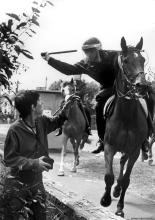
Whatever their intentions, the recent TV documentaries on the 1984-5 miners' strike provide evidence how a trap was laid for the workers by the twin strategies of government and unions. In a second article, The working class has finally recovered from the defeat, we look more closely at the international context of the strike and its long-term impact on the class struggle.
Economic crisis
Germany: workers will pay the cost of the economic crisis
Published by: ICConline
Friday, 29 March, 2024 - 00:02
Europe’s most powerful economy is hit hard by the combined effects of war, economic crisis, and the ecological disaster.
Proletarian political milieu
War in the Middle East: The obsolete theoretical framework of the Bordigist groups
Published by: ICConline
Friday, 1 March, 2024 - 20:11
Some revolutionary groups have defended unambiguous internationalist positions in the face of war. But Bordigist groups have been led into opportunist slidings, the trivialisation of war, and an underestimation of what’s at stake in the present situation.
Strikes in Northern Ireland
Northern Ireland: workers join the international revival of struggles
Published by: ICConline
Thursday, 25 January, 2024 - 11:30
Despite the manoeuvres of the ruling class, workers in Northern Ireland are fighting for their own class interests
Reader's letter
Support for “Free Palestine” means support for imperialist war
Published by: ICConline
Tuesday, 20 February, 2024 - 14:42
We publish here an exchange of views with T, a contact in Germany, focusing on the mobilisations in support of “Freedom for Palestine”.
The ICC's fight against opportunism and parasitism
Published by: ICConline
Friday, 15 December, 2023 - 10:05
A letter from a sympathiser expressing solidarity with the ICC in its defence of the proletarian political milieu.
Internationalists and imperialist war
Correspondence with Anti-Militarist Initiative
Published by: ICConline
Tuesday, 13 February, 2024 - 10:25
Our response to a message from the Ant-Militarist Initiative, a network mainly based in Eastern Europe, which is part of a wider questioning of capitalism's war drive in the wake of the wars in Ukraine and the Middle East.
Formation of the Left Opposition in Russia
A proletarian but opportunist reaction to the degeneration of the Comintern
Published by: ICConline
Sunday, 4 February, 2024 - 07:38
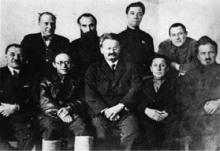
A hundred years ago, the Left Opposition around Trotsky and others was formed inside the Communist Party of Russia. This article focuses on the opportunist errors which eventually led it to abandon the proletarian camp.
Populism in Argentina
Milei takes his chainsaw to the Argentine working class
Published by: ICConline
Thursday, 25 January, 2024 - 13:10
Another example of a populist party emerging within the accelerated decomposition of capitalism and characterised by the bourgeoisie's loss of control of its political game.
World-wide class struggle or capitalist devastation
In the face of a mad rush towards chaos and war, the world-wide development of the class struggle
Published by: ICConline
Friday, 26 January, 2024 - 17:33
Articles from International Review 171 on the two poles of the world situation: on the one hand capitalism's accelerating drive towards barbarism and destruction, and on the other, the revival of proletarian struggle, opening the possibility of a new society.
Ukraine: Two years of imperialist confrontation, two years of barbarism and destruction
Published by: International Review
Thursday, 25 January, 2024 - 16:47
The war in Ukraine displays all the characteristics of imperialist war in the decadence of capitalism, and in particular in its period of decomposition.
After the rupture in the class struggle, the necessity for politicisation
Published by: International Review
Thursday, 18 January, 2024 - 11:36
The working class is shaking off decades of passivity. To understand the depth of the process underway, and what is at stake, a historical approach is necessary.
Discussions in the ICC
Dossier: Internal debate on the world situation
Published by: ICConline
Wednesday, 14 February, 2024 - 12:45
This dossier contains contributions to an internal debate relating to the understanding of the ICC’s concept of decomposition, to inter-imperialist tensions and the threat of war, and to the balance of forces between the proletariat and the bourgeoisie.
War in the Middle East
The ambiguities of anarchist internationalism
Published by: ICConline
Monday, 8 January, 2024 - 08:52
The war in the Middle East poses an even greater test for those seeking to defend internationalism. This article shows the ambiguities of the Anarchist Communist Group which has been generally clear on the war in Ukraine.
The SWP justifies Hamas slaughter
Published by: ICConline
Friday, 13 October, 2023 - 13:38
While revolutionaries, as internationalists, condemn all the massacres of imperialist war, leftists give reasons to support and die for different capitalist factions.
Imperialism and decomposition
The USA: Superpower in the decadence of capitalism, today epicentre of social decomposition. Part II
Published by: International Review
Saturday, 30 December, 2023 - 00:24
The first part of this article described the rise to power of American imperialism which in the decadent phase of capitalism became the dominant imperialism, leader of the Western bloc that finally triumphed over the rival Soviet bloc in the late 1980s. In the introduction to this first part, it was already emphasized that "the collapse of the Eastern bloc marked the beginning of a terminal phase in the evolution of capitalism: social decomposition", which would not only accelerate the bourgeois system's descent into chaos and barbarism, but also lead to the decline of American leadership. The second part of this article will focus precisely on highlighting this process, which began in the 1990s.
Imperialist conflicts
Resolution on the international situation, December 2023
Published by: International Review
Thursday, 28 December, 2023 - 12:43
A complement to the resolution on the international situation adopted at the 25th ICC Congress.
The Middle East conflict
Dossier on war in the Middle East
Published by: ICConline
Friday, 12 January, 2024 - 10:26
A collection of articles illuminating the origins of and current conflict in the Middle East.
Defence of the Communist Left
Public Meetings of the ICT in France: a real political failure
Published by: ICConline
Saturday, 11 November, 2023 - 16:47
A reply to the ICT's reports of their recent public meetings in France, which make some serious allegations against the intervention of the ICC at these meetings
The proletarian political milieu
The ICT and the No War But the Class War initiative: an opportunist bluff which weakens the Communist Left.
Published by: ICConline
Monday, 11 September, 2023 - 19:54
Our critique of the recent statement of the Internationalist Communist Tendency justifying the creation of a number of local committees around the slogan 'No War But the Class War'
25th International Congress of the ICC
Resolution on the International Situation, 25th ICC Congress
Published by: International Review
Monday, 5 June, 2023 - 16:54
A text covering the evolution of the economic crisis, inter-imperialist tensions, the class struggle and perspectives for all three, adopted by the ICC's 25th Congress.