


Submitted by ICConline on

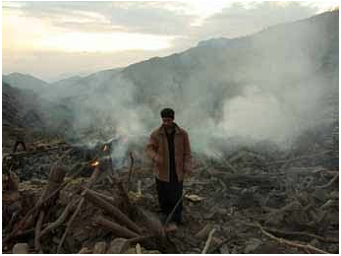
We are publishing here an article from the Turkish group Enternasyonalist Komünist Sol (EKS), which analyses the different imperialist interests and rivalries underlying the Turkish army's recent incursions into northern Iraq. We consider it important for several reasons: first and foremost, by offering a clear analysis on an internationalist basis, it strikes a blow against both Turkish and Kurdish nationalism, in a region where the propaganda campaigns of all the competing bourgeois factions are doing their utmost to stoke nationalist hatreds so as to use the workers and poor masses as cannon fodder in their own sordid struggles for power and influence; second, it gives a voice to the feelings of indignation and revolt among the workers in Turkey who have been conscripted into this bloody conflict, and gives the lie to the bourgeoisie's claims, in Turkey and elsewhere, about universal popular support for the war.
Turkish ımperialism’s latest adventure in northern Iraq
According to the official statement, 10,000 Turkish troops crossed the border into Northern Iraq on 21st February. Bloody clashes took place within Turkish borders during the invasion. The death toll of the operations which lasted for eight days is controversial: the Turkish Armed Forces claim that 24 of its soldiers died while they killed 237 PKK[1] members while the PKK claims that 9 of its people were dead, and it is claimed both by the PKK and the press connected to the local Northern Iraqi Kurdish authorities that more than a hundred soldiers from the Turkish Armed Forces died and have been hidden in hospital morgues. If one thing is certain, it is that hundreds of workers' children have been forced to slaughter each other in these eight days. This is not the first war conducted by the Turkish Armed Forces in Iraq. During its imperialist war against the PKK, Turkey has entered Iraq 24 times, including invasions with 7,000 troops in 1983, 15,000 in 1992, 35,000 in 1995 and 1997 and 10,000 in 1998. The Turkish army was bombing Iraq already prior to the latest invasion, and had 2,000 soldiers in its bases in Northern Iraq. However, there was a difference between the latest heated conflict and past imperialist invasions conducted by the Turkish state. While in the past Turkish imperialism conducted its operations in Iraq freely, comfortably and without the slightest negative reaction from the Saddam regime and even organized some operations with the open support of the Peshmerga[2] forces, this time Turkish imperialism had created the possibility of a more serious and total war with the local authorities by launching this bloody operation. Mesud Barzani[3] had said "if the Turkish army targets Kurdish civilians or civil structures, we will order a wide and general resistance" and the Kurdish parliament had voted for closing the bases of the Turkish Armed Forces in Northern Iraq which hosted 2,000 soldiers. Had Turkey stayed in Iraq longer, a much more serious war could have started. The only reason behind Turkish imperialisms invasion of Iraq was not attacking the PKK. The claim that this was a war against ‘terror' was nothing but a lie, as none of the ‘operations' that were launched before had any effect in this respect.
Then why did Turkish imperialism enter Iraq this time? The government spokesman Cemil Cicek had declared that the ‘operation' will continue until PKK was destroyed, and the government had said that the target was Kandil mountain[4], that they were to stay there until the time where they won't have to invade Iraq again and that the army was not going to leave until ‘the job was done'. Prime Minister Tayyip Erdogan had to change his address to the nation speech which said "the operation continues with determination" hours before he was to make the speech when he learned that the Turkish Armed Forces had withdrawn early in the morning, indicating clearly that this situation was a surprise for the government. Why did Turkish imperialism immediately return when they were claiming that no one can intervene in their invasion of Iraq?
In order to answer those questions, it is necessary to put Turkey's latest war in Iraq in its place within the conjuncture of world imperialism and examine the function of this war from this perspective. As is well known, relations between the Turkish government and America were quite tense prior to the operation, over America's support of PKK's Iranian wing, PJAK against the Iranian regime and the possibility of the recognition of the Armenian genocide by the US. The war on top of all these issues made relations even worse as America was not happy with the possibility of the only piece of rock (Kurdistan) it has been clinging on to in the Iraqi quagmire falling apart. This was the reason why the US constantly repeated that Turkey should leave Iraq in a very short period of time. Even if the fact that the Turkish army immediately ended the operation a day after the meeting between the authorities representing the American government and the General Buyukanit, chief of staff of the Turkish army is not enough proof to show that the order to end the operation has came from the Americans, the fact that both Turkish and American authorities have been very careful in constantly denying the existance of such a situation is enough to prove its existence. Nevertheless, the Kurdish government in Iraq had accused the Americans about Turkey's invasion, and had claimed that America had allowed this operation, and they were not really mistaken in their grouching.
The principle problem of America in the region is against Russia's close ally, Iran. All the forces involved in this situation, Turkish Armed Forces and the PKK who have been clashing in Iraq, or other forces such as the factions of Barzani or Talabani[5] for whom clashing with each other, or with the Turkish army or the PKK is a possibility, are in the end of day allies of America, at least allies of America against Iran locally and Russia globally, despite the possibly different roles they would play or possibly different distances they would try to conserve in future conflicts, their side at the end of the they seemed set. Thus, as much as the Americans did not want the last ‘stable' piece of Iraqi territory to be ruined, they did not want those forces which were either involved in open war or had serious tensions among each other to focus on destroying each other, or to turn their back on the US because of their internal conflicts. PKK activity in Northern Iraq was creating further tensions between Turkey and the Kurdish autonomous government, whose imperialist interests were already clashing, and was creating the possibility of Turkey and Iran establishing closer relations with each other due to their common fight against the PKK. In the current situation, PKK was for the most part useful to the US inasmuch as it fought against Iran and the US naturally preferred the PKK to focus on Iran rather than Turkey. If we examine the geographical locations of the PKK camps in Northern Iraq, we can see that the Camp Zap taken over by the Turkish Armed Forces was very close to Turkish borders and the city of Hakkari[6] and it was very suitable for crossing the Turkish borders. However Kandil mountains, claimed by the Turkish government to be the main target, are near the Iranian border and Zap is quite distant from Kandil. The fact that the Turkish Armed Forces directly moved towards Zap indicates that the target was never Kandil but, quite the contrary, to push the PKK towards Kandil, in other words towards Iran. In this sense assuming that Turkish imperialism invaded Iraq with America's permission and that not just the end but the whole conduct of war developed according to American wishes would be logical.
Nevertheless, it is necessary to look deeper in world imperialist relations for understanding the contradiction between the governments words and the Turkish Armed Forces' actions. Both the AKP[7] government and the Turkish military bureaucracy are on the same point in regard to working with and orienting towards the "West" rather than other imperialist powers such as Russia, China or Iran, however those two different wings want to have closer relations not with the same but with different "West"s. Those two "West"s are the United States and Europe. Obviously, prior to the invasion, the government and the Turkish Armed Forces seemed to have reached a compromise and made a peace. MHP[8], which is close to the army and state bureaucracy and of course which has always been deeply connected with the United States had saved the AKP from troubling situations at two critical issues: the election of the president[9] and the constitutional matter of the legalization of head scarf in the universities and just afterwards, the army and the government had begun a war, hand in hand. There was, at least, the ground for thinking that there had been some sort of agreement between the army and the state. The government had crushed the opposition in the elections and was doing rather well against the state bureaucracy and was taking bureaucratic institutions one by one. The only fact that could indicate that such alliance had not truly taken place during the war was the conflict between the traditional state institutions and the state institutions in which the government is effective that found a reflection on the press, and the army, unsurprisingly, had stopped commenting on this issue some time ago. The AKP government might have thought during the war that they had reached a compromise with the Army, but in reality there had been no compromise and agreement between the two factions, at least there hasn't been any according to the army. At the end of the war, the army managed to give the first succesful response to the victories AKP had been taking against other factions of the bourgeoisie, and had stroke a truly strong blow against the AKP for the first time. The government was either not informed sufficiently in regards to the operation, or they were misinformed, in any way they thought they were acting together with the Turkish Armed Forces but they were alone in thinking this. AKP appearing as the loyalist supporter of the war was going to decrease their influence amongst Kurds[10] living in Turkey and the declarations they have given before the retreat were going to make them look seriously contradictory, ineffective and weak.
It was not only the Turkish government who was struck a blow following this war, also the faction of the European Union[11] which strives to be more distant from the US was hit by a wave, albeit quite a small one. We can recall how in 2003, the Turkish government got closer with Europe when the AKP government refused to send soldiers to the locations which the US wanted them to send soldiers in Iraq, which was quite similar to the response of some European states. Also Refah Party[12] , which the AKP is rooted in was supported by Germany against the traditionally pro-American Turkish Armed Forces which was unsurprisingly supported in that conflict by the Americans as well. As for about Turkish's invasion of Iraq, European authorities declared that they "understand the need of Turkey to protect it's population from terrorism" and the bourgeois media in Europe declared the war to be disgraceful for the US. Not only this, but the "Socialist Workers" Party of Spain, currently in power, had declared that in case they win the elections, they were going to support Turkey on the Cyprus question. The fact that Turkey immediately retreated after Americans told them to do so showed the influence of the US in the region again, while disproving some of the things said in the European press about the invasion. In this perspective, it is significant that Prime Minister Tayyip Erdoğan emphasized the relations with Germany right after talking about the war, and said that Germany is number one in Turkey's foreign trade and that relations between Turkey and Germany are beyond classic diplomatic relations. Also the stances of Europe and America during the latest conflict between the bureaucratic bourgeoisie and the AKP government over the law suite against the AKP is significant, in which while the European power were talking about the importance of democracy and freedom and declaring themselves to be against the law suit, American authorities were emphasizing the importance of secularism.
The stance of the leftists in Turkey should be mentioned here. With the end of the cold war and the deepening of the crisis the left is becoming increasingly confused about which nationalists to support and the invasion of Northern Iraq by the Turkish army showed this clearly. The "Workers" Party[13] having decided that Turkey is an oppressed nation has dived straight into social chauvinism, open co-operation with the MHP, and support of the state. The TKP (Turkish Communist Party), with its slogan of ‘Don't let the Americans divide our country' seems to be going in the same direction. All this talk of ‘our country' is hardly surprising from an organization which has organized a ‘Patriotic Front'. Let us be very clear on this question. This is not ‘our country'. Workers do not own this country, just as they don't own any of the other ones. The bourgeoisie are the owners and masters of this country. Workers have no interest at all in joining fronts to protect the property of the rich. As for the rest of the left, the recent invasion of Iraq brought forth mainly liberal whining from the majority of them. They, in a manner that was beneath contempt talked about democracy, and letting the Kurds have their rights while remaining afraid to condemn the state. It is as if they were begging the Turkish state, dripping with the blood of national minorities from its birth in the aftermath of the Armenian genocide to its most recent invasion of Northern Iraq, to be nice to people. Finally of course there were the ‘extremists' who rejected support for the Turkish state and advocated instead support for the PKK. According to them, the cause of socialism is best served by having young Kurdish boys and young Turkish boys kill each other in the mountains. In reality, there is no difference between these ‘left' nationalists, and the ‘left' nationalists who support the Turkish state. Neither of them have anything to offer the working class but more deaths and suffering. Both of them tried to pull the working class into giving up its own interests to fight for the interests of the nation. In the process of this they both worked as an active force in creating divisions within the working class. They both mobilized workers to die for the nation, one on behalf of the Turkish state, and the other on behalf of an idea of ‘Kurdistan', but in reality of the foreign states backing them. The communists bring a different perspective to this. For us, the workers have no country. It is not about choosing which nationalist gangsters to support but about trying to rebuild, however slowly, an independent movement. A movement that ultimately will be able to resist the Turkish states drive towards war.
Workers' revulsion against the war
The twenty fifth adventure of Turkish imperialism in Norther Iraq ended, leaving hundreds of corpses in only eight days. Nevertheless, the war between the PKK and the Turkish Armed Forces continues to force workers to slaughter fellow workers in Turkey. All factions involved, including the military-bureaucratic bourgeoisie, the private bourgeoisie, the PKK leaders and the Kurdish bourgeoisie hope to gain from this imperialist war and are trying to gain the upper hand against their rivals who they can't fight directly. Both the invasion of Iraq and the war continuing in Turkey is a war of the bourgeoisie, and even though Turkey has retreated from Iraq for now, this war continues to drag Turkey and the Middle East in general towards imperialist barbarism. The victims of this bloody and barbaric war are the Kurdish and Turkish workers who are forced to kill each other, die or lose the ones they love despite the fact that they have common interests. The only force than can end this war, just like the only force that can end all imperialist wars in the world, is the working class. Neither pacifism, nor democratic struggle or begging for the bourgeoisie with it's bloody ends to find a solution can end wars. Wars are a part of capitalism and they will end only when workers "turn the imperialist war into revolutionary civil war" as they have done while stopping the First World War. Thus it is necessary to examine the reaction of the working class in regards to this war, especially of the sections of the working class that has been suffering the most: those who are forced to fight and the families of those who die.
The grandfather of the soldier Bayram Guzel, who died in November 2007 said: "They die and die, always the children of the poor fellows. The families of the poor fellows burn. The hands and arms of the poor are short so they hit us in the back and make us carry the carriage. Why aren't the children of the bosses and generals being ‘martyrs'!". The mother of Burak Okay who died in September 2006 said "My son couldn't even kill flies and they made him go to the mountains to kill human beings. My son is no martyr and he died in vain. I do not accept sacrificing my son". The father of Cengiz Evranos who died in the same month said: "I am not saying ‘all for the good of the country'[14]. Politicians: send your children to Darbogaz too". The mother of Sahin Abanoz who died in April 2006 said: "There is a differentiation between the rich and the poor. Is there a single child of a parliamentary deputy [in the battlefield]? Is there a single child of a president? They only lined up and sent the children of the poor, the children of the unfortunate." The children of a soldier who had been among the first victims of the war between the PKK and the Turkish armed forces in 1980 said: "My neighbors look with condemning eyes, because I am not putting up a flag in my balcony. They don't know that the Turkish flag in the house was not bought from a store with money or came as a promotion with a newspaper; they gave it from my father's coffin. How can I hang that flag? And how many square metres of flags, marches of how many people or how many jingoistic speeches can ease my pain? No I have not put up a flag and I will not put up one. Maybe martyrs don't die for millions, but fathers, sons and brothers die for some of us. And they die in such a way that the pain of it never ends. I don't know how others are doing, but if I had another father, I would never ever sacrifice him for this country."
A soldier, whose ‘service' finished in 1998 says in an anonymous interview: "When you look it from Tunceli, the man [officer] gets double the wage he would normally get. Why should they want to declare an end to the ‘state of emergency'[15] Such good money! He does three years service when it officially is two. So he thinks if I die I die but I make good money. In my opinion, the stopping of this war should not be left in the hands of those people (...) All regimes that will cause the war to continue should be broken. Capitalism itself if this is what it takes." Someone who has been a soldier in Van in 1997 explains the soldiers feelings by saying "Everyone had a down on the rich" and than says "If I have to be a soldier again, I will do what I wanted to do but couldn't, I will run away. I will definitely return that green uniform and being under orders (...) I hate who this war is conducted for and who gains from this war." Someone who was a soldier in 1996 in Bingol says in an anonymous interview: "The PKK is dirty against its people from whose shoulders it has risen as much as the Turkish army, state, other forces or the police are dirty (...) One develops an antipathy against both sides (...) The politicians don't want a solution either. The was has created its profits, this slow war that has been going on for 13-14 years created its own institutionalization which could make the war go on for another 14 years. This is a business, it is a business for the PKK as well." Someone who was a soldier in Siirt in 1995 says: "I wanted to know who my enemy was before I went there. Now I finished this questioning. Who is my enemy? The ruling class of course, who else could it be? (...) I clarified myself on who has been continuing and who has been feeding from this war. The officers wanted the war to continue, they were making good money out of it." Someone who has been a soldier in Mardin in 1992 says "I haven't seen any children of the rich over there, they only and always send the children of the poor. Lots rebelled against this in my time, asking why they don't see the children of the rich there, I think those who rebelled were correct."
The bourgeoisie fears this reaction of soldiers who are sent to die or the families who are expected to say ‘all for the good of the country' when their children die, and they try to hide it, condemn it at all costs, and intimidate those who express it. Not only that, sections of the ruling class try to use those reactions, and pull those voicing those reactions to the war to this or that faction of the bourgeoisie. The working class voices raised against the war is not a point raised by daily and generalized class struggle in Turkey yet. The ruling class is trying to silence, hide, sabotage daily working class struggles just like it is trying to do with those voices against the war, and they are also trying to control daily class struggles through the unions and even use and manipulate them for the purposes of this or that faction of the bourgeoisie as well. However, those attempts of the bourgeoisie fail to hide the fact that class struggle is rising in Turkey as it is rising in the whole world nor do they destroy the possibility of the working class getting through all the obstacles the bourgeoisie is trying to plant in its way. Even this possibility is enough to seriously scare the ruling class, as when the children of workers who the leaders of the Turkish Armed Forces or the PKK send to death understand that the enemy is not the proletarians they are forced to face but those who give the orders, and when the working class starts acting and struggling unified independently and internationally, those who will be overthrown is none other than the bourgeoisie.
Enternasyonalist Komünist Sol
[1] PKK, Kurdistan ‘Workers' Party, mainly active in Turkey but also in Iraq and Iran.
[2] In other words the armed forces of the Kurdish part of Iraq.
[3] Mesud Barzani, leader of the Kurdistan Democratic Party and the Kurdistan regional autonomous government.
[4] Located near the Iranian border, Kandil is said to be the main base of the PKK.
[5] Celal Talabani, Kurdish politician who is the leader of Patriotic Union of Kurdistan and the current president of the Iraqi state.
[6] A border city with high PKK activity and an overwhelmingly Kurdish population who have been subjected to the most horrible forms of state repression.
[7] The center-right and Islamic ruling party in Turkey, similar to Christian-Democrats in Europe.
[8] The main Fascist party, also known as Grey Wolves.
[9] A small note on the parliamentary system in Turkey: the president is elected by the parliament rather than the elections and the AKP had been unable to elect a new president when the old one, Ahmet Necdet Sever finished his term due to a legal procedure regarding the number of people who should be in the parliament in the day when the president is elected. Indeed why they pushed for early elections, which they won easily.
[10] AKP had done extremely well among Kurds in the last elections, getting almost as much votes as the Kurdish nationalist Democratic Society Party (DTP) from predominantly Kurdish cities.
[11] It is important that this article highlights the existence of different factions within the European Union bourgeoisie, which is far from united on the attitude to adopt towards Turkey, and in particular towards Turkish entry into the EU (ICC note).
[12] Refah Party (Welfare Party) was an Islamacist Party which lost it's significance following the rise of the AKP.
[13] "Workers" Party, is an ultra-nationalist Turkish Maoist (or possibly "ex" Maoist although they still upheld Mao) and pro-China organization.
[14] ‘All for the good of the country' is a common nationalistic slogan which the state wants to hear from the family of dead soldiers.
[15] There is a constant and officially declared ‘state of emergency' in some predominantly Kurdish cities.
 del.icio.us
 Digg
Digg Newskicks
 Ping This!
 Favorite on Technorati
 Blinklist
 Furl
Furl Mister Wong
 Mixx
Mixx Newsvine
 StumbleUpon
 Viadeo
 Icerocket
 Yahoo
Yahoo identi.ca
 Google+
 Reddit
 SlashDot
 Twitter
 Box
Box Diigo
Diigo Facebook
 Google
 LinkedIn
 MySpace